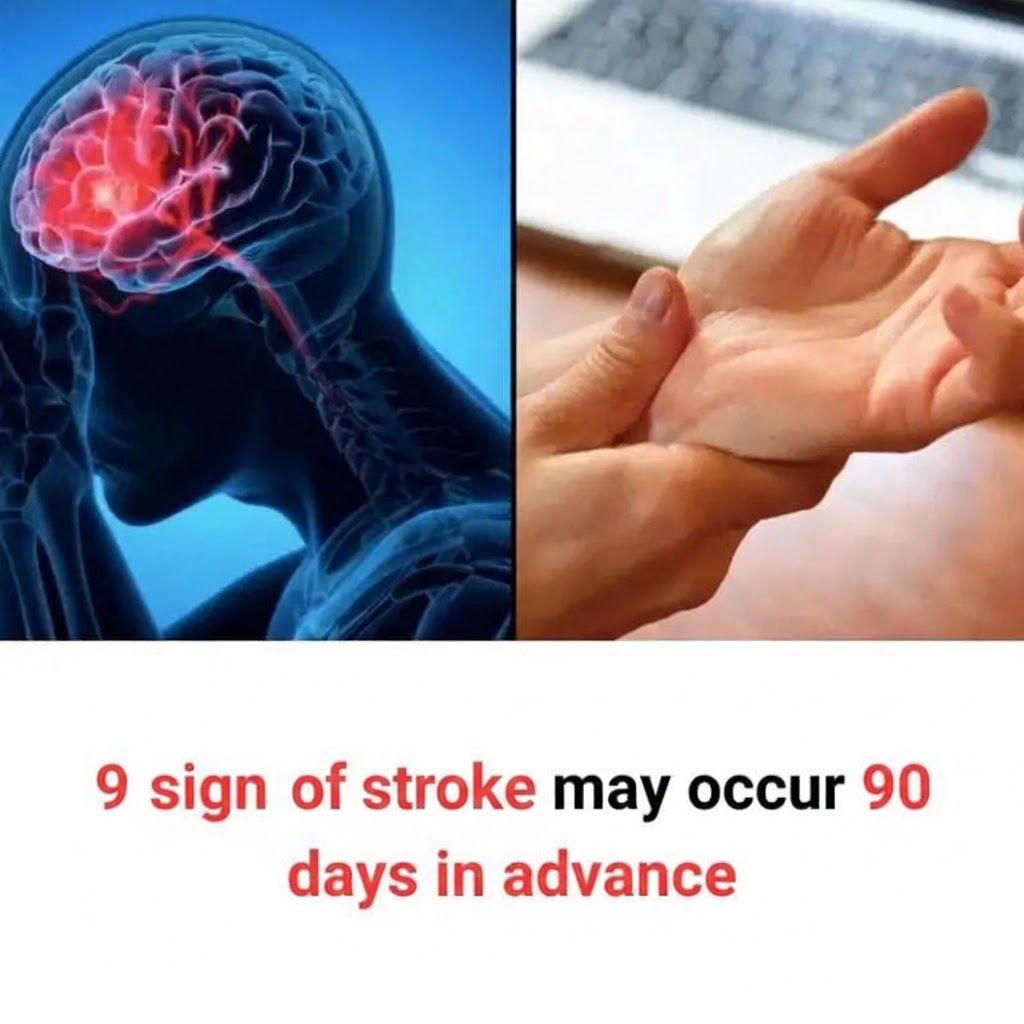
A stroke often seems sudden — one moment a person feels fine, and the next they are facing a life-threatening emergency.
But studies show that up to 80% of strokes are preceded by warning signs, sometimes appearing as early as 90 days before the actual event.
Recognizing these subtle clues can literally save a life.
Here are the early symptoms experts say may appear weeks or months before a stroke.
1. Transient Ischemic Attacks (TIAs): The Most Important Warning
A TIA, often called a “mini-stroke,” is the strongest sign that a major stroke may occur within days or months.
TIAs happen when blood flow to the brain is blocked for a short time — usually a few minutes.
Common signs of a TIA:
-
Sudden weakness or numbness on one side of the body
-
Slurred or unclear speech
-
Temporary vision loss or blurry vision
-
Sudden dizziness or loss of balance
-
A brief, intense headache
TIAs do not cause permanent damage, but they are extremely dangerous.
Up to 1 in 3 people who have a TIA will later have a full stroke.
2. Unexplained Episodes of Dizziness or Loss of Balance
Constant dizziness is not normal.
If someone repeatedly feels:
-
Lightheaded
-
Off-balance
-
Like the room is spinning
-
Difficulty walking in a straight line
…it may indicate reduced blood flow to the brain.
This can happen weeks before a stroke, especially in older adults or people with high blood pressure.
3. Persistent or Unusual Headaches
Not every headache is a warning sign.
But a specific type can be:
“Thunderclap” headaches
A severe headache that comes on suddenly and feels unlike anything a person has felt before.
Chronic new headaches
Headaches that last for days or weeks and feel different from normal migraines.
These can signal early problems in blood vessels that increase stroke risk.
4. Short Episodes of Vision Problems
Vision changes that come and go may suggest disruption in blood flow behind the eyes.
These include:
-
Sudden blurry vision
-
Seeing double
-
Losing sight in one eye for a few seconds ("curtain effect")
Even if the symptom disappears quickly, it is a serious warning.
5. Sudden Numbness or Tingling in the Face or Limbs
If the feeling appears on one side of the body, even for a moment, it may indicate a temporary brain blockage.
Examples:
-
One arm feels weak
-
Half the face tingles
-
One leg feels “heavy” or weak
If this repeats within 90 days, it must be checked.
6. Trouble Understanding or Speaking Clearly
Weeks or months before a stroke, a person may notice brief episodes where:
-
They can’t find the right words
-
Their speech becomes slow or unclear
-
They suddenly forget simple terms
-
They misunderstand what others are saying
Even if it lasts only seconds, it’s an early brain warning.
7. Sudden Personality or Cognitive Changes
When parts of the brain don’t receive enough blood, behavior may change.
Possible signs:
-
Unusual irritability
-
Confusion
-
Difficulty concentrating
-
Memory lapses
-
Slower thinking
These changes are subtle but significant if they happen repeatedly.
8. Severe Fatigue and Weakness
People often ignore this sign because it feels like simple tiredness.
But persistent, unexplained fatigue — especially alongside dizziness or headaches — may mean the brain isn’t getting enough oxygen.
If a person suddenly:
-
Sleeps more than usual
-
Feels exhausted after normal tasks
-
Struggles with basic coordination
…it may be an early red flag.
9. High Blood Pressure Spikes
High blood pressure (even without symptoms) is the #1 cause of stroke.
If someone regularly sees high readings like:
-
140/90
-
150/100
-
or higher
…they are entering the danger zone.
Sometimes high blood pressure causes headaches, chest pressure, or shortness of breath — all warning signs weeks before a stroke.
Why These Early Signs Matter
Many people ignore early symptoms because they go away.
But a stroke rarely comes out of nowhere — the body usually tries to warn us.
Recognizing early signs can:
-
Prevent permanent disability
-
Prevent brain damage
-
Save someone’s life
Immediate evaluation by a professional is essential.
When to Seek Emergency Help (FAST Rule)
Even if symptoms last only a few minutes, seek help if you see:
F — Face
One side droops when smiling.
A — Arm
Arm weakness or numbness.
S — Speech
Speech is slurred or strange.
T — Time
Call emergency services immediately.
Time is the biggest factor in preventing brain damage.
Final Thoughts
A stroke can be devastating, but many early symptoms appear up to 90 days before the attack.
Paying attention to these warning signs — especially TIAs, dizziness, vision problems, headaches, and numbness — can make a life-saving difference.