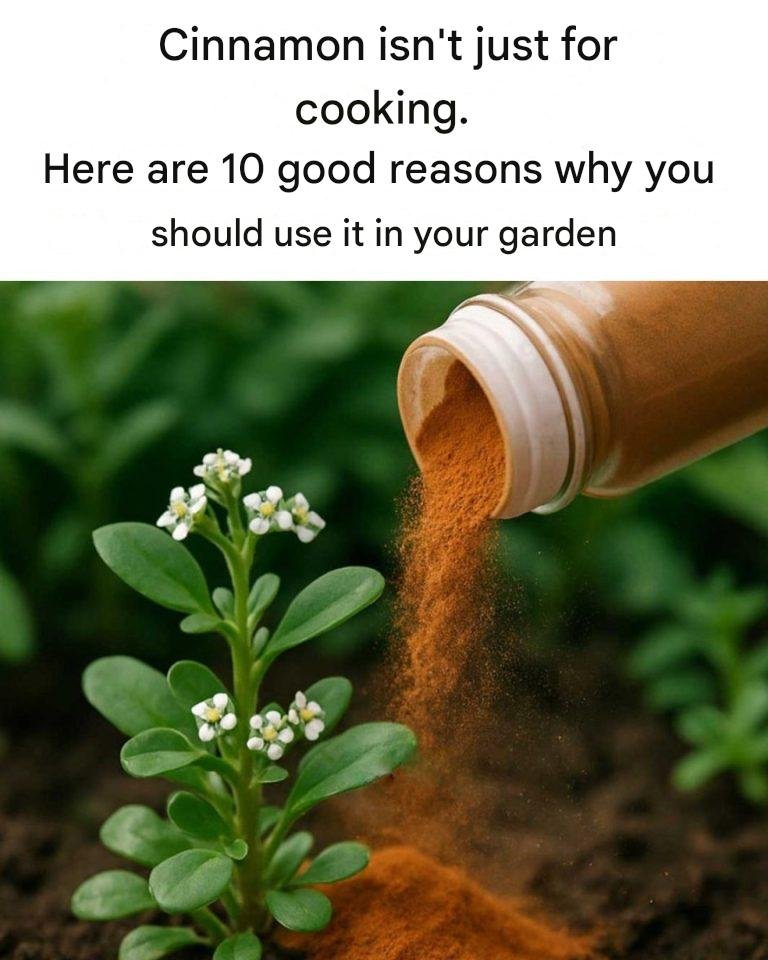
Is it possible that cinnamon is only used to flavor homemade apple pies? You’ve noticed again. Hidden beneath its dual, spicy scent is a discreet yet effective ally for your garden. Unwanted insects, fungal diseases, unpredictable seedlings… What if a simple kitchen spice could work wonders? What you’re about to discover could transform your approach to gardening.
Cinnamon, a natural barrier against pests.
It’s a bit like providing plants with invisible protection. Cinnamon acts as a natural repellent to many insects, including mosquitoes, midges, and other uninvited guests. Dissolved in plantations, it sends a clear message: “Move on, there’s nothing to look at here!” Safe for the environment and children, it provides a gentle alternative to electric insecticides.
Say goodbye to ants without poison
. Ants, no matter how organized, flee cinnamon. Its scent disrupts their olfactory pathways, much like rubbing down road signs on the highway. Often, just sprinkling cinnamon on a plant is enough to stop it from growing without harming beneficial animals in the garden.
Are your seedlings mysteriously wilting? Fungi are often the cause of “seedling blight.” Cinnamon, thanks to its natural antifungal properties, acts as a veritable shield. By gently sprinkling young shoots with fertilizer, you reduce the risk of infection, giving them a boost of energy and strengthening their immunity.
Supporting Rooting of Cuttings
: Before planting, dip the cutting tips in cinnamon. This stimulates root growth and protects the young stem from mold. It’s the plant equivalent of a good start in life!
Healthier and More Fertile Soil: Cinnamon not only repels unwanted pests. It also improves soil quality thanks to its antibacterial properties. By adding it to your soil, you’re helping to create an environment conducive to beneficial microorganisms—it’s like creating a haven of well-being for your soil.