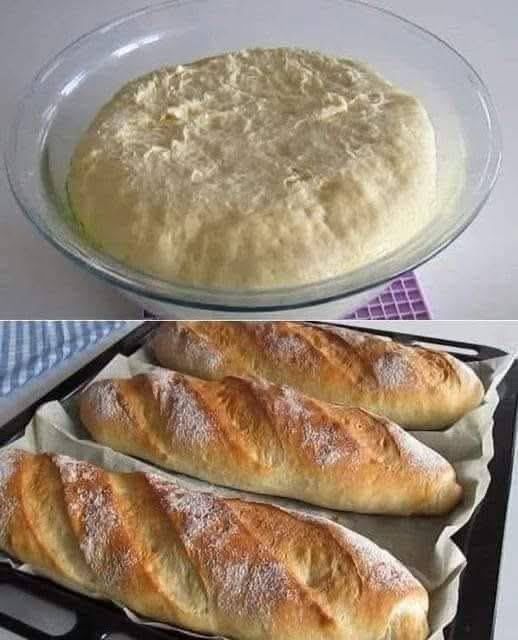
Fluffy on the inside, golden and crisp on the outside — the perfect everyday bread.
There is something magical about baking your own bread at home. The moment the warm aroma fills your kitchen, you immediately feel a sense of comfort, accomplishment, and joy. Soft & Crispy Homemade Bread Loaves bring together the best of both worlds: a pillowy, tender crumb inside and a beautifully crisp, golden crust on the outside. These loaves are simple enough for beginners yet impressive enough for seasoned bakers who want bakery-style results right from their oven. In this detailed guide, we will walk through every step of the process so you understand not only how to make the bread, but also why each step matters.
Ingredients (2 medium loaves)
-
4 cups (500 g) all-purpose or bread flour
-
1 ½ cups (360 ml) warm water (around 40°C / 105°F)
-
2 tbsp sugar
-
2 tbsp olive oil (or melted butter)
-
2 tsp salt
-
2 ¼ tsp instant yeast (one packet)
Optional enhancements:
-
1 tbsp milk powder (for extra softness)
-
1 tbsp honey (for flavor + browning)
-
1 egg for brushing the top (shiny crust)
-
Sesame or poppy seeds
Step-by-Step Instructions
1. Activate the yeast (5 minutes)
In a large bowl, combine warm water, sugar, and yeast. Stir gently and let the mixture sit for 5 minutes until it becomes foamy on top. This foam indicates that your yeast is alive and ready to help the dough rise, giving you those soft, well-aerated loaves.
2. Form the dough (5 minutes)
Add flour, salt, and olive oil to the yeast mixture. Begin mixing with a spoon until the dough comes together. At this stage, the dough will look shaggy and slightly sticky — this is normal and important for softness later.
3. Knead the dough (8–10 minutes)
Transfer the dough to a lightly floured surface. Knead by pushing forward with the heel of your hand, folding, turning, and repeating.
You’ll notice the dough becoming smoother, more elastic, and less sticky as the gluten develops. This elasticity is what traps tiny bubbles inside the dough, creating a soft yet structured loaf.
Test: If you stretch a small piece of dough and it forms a thin “windowpane” without tearing, your gluten is ready.
4. First rise (1 hour)
Place the dough in a lightly oiled bowl, cover with a towel, and let it rise in a warm area for 1 hour or until doubled in size.
This slow rise deepens the flavor and gives your bread its signature softness. If your kitchen is cold, place the bowl inside the oven with the light on — the gentle warmth helps the dough rise reliably.
5. Shape the loaves (5 minutes)
Punch down the dough to release excess air. Divide it into two equal parts.
Flatten each piece into a rectangle, then roll it tightly into a log. Pinch the seams closed and tuck the ends underneath to create a smooth loaf.
Place each shaped loaf into a lightly greased loaf pan or onto a baking tray lined with parchment.
6. Second rise (30–40 minutes)
Cover the loaves again and let them rise until they puff up and nearly double in size.
This step ensures your bread will be light, airy, and tall. The dough should feel soft and bouncy when you gently touch it.
7. Prepare the crust (optional)
For a crisp, golden exterior, you can:
-
Brush with egg wash (1 beaten egg + 1 tbsp water)
-
Brush with olive oil for a rustic finish
-
Sprinkle sesame seeds for aroma and extra crunch
For an even crispier crust, place a small heat-safe bowl of water in the oven during baking. The steam helps form a beautiful bakery-style shell.
8. Bake the bread (25–30 minutes)
Preheat your oven to 200°C (390°F).
Bake the loaves for 25–30 minutes, or until:
-
The tops are golden
-
The loaves sound hollow when tapped
-
The internal temperature reaches 90–95°C (190–205°F)
This balance of high heat and steam creates that perfect contrast: crisp on the outside, soft on the inside.
9. Cool the loaves (15 minutes)
Let the bread cool on a wire rack for at least 15 minutes before slicing.
Cutting too early releases steam and makes the interior gummy — cooling helps the crumb set beautifully.
Tips for Perfect Homemade Bread
-
Use bread flour for a chewier texture and better structure.
-
Don’t add too much flour while kneading — slightly sticky dough = softer bread.
-
Rising times may vary depending on your room temperature.
-
Add herbs or garlic to the dough for flavor variations.
-
Brush with melted butter right after baking if you want a softer crust.
Variations
Milk Bread Loaf (Ultra Soft)
Replace half the water with warm milk and add 2 tbsp butter.
Garlic Herb Loaf
Add 1 tbsp minced garlic + 1 tbsp mixed dried herbs to the dough.
Honey Wheat Loaf
Use 1 cup whole wheat flour + 3 cups all-purpose flour; add 2 tbsp honey.
Cheese-Stuffed Loaf
Add shredded mozzarella or cheddar inside when rolling the dough.
Serving Suggestions
Fresh homemade bread pairs wonderfully with:
-
Butter and jam
-
Olive oil and balsamic
-
Soups and stews
-
Breakfast sandwiches
-
French toast
-
Grilled cheese
You can use it for sandwiches, toast it, or simply enjoy it warm with butter melting into every soft bite.
Storage
-
Store at room temperature for 2–3 days.
-
Freeze for up to 2 months (whole or sliced).
-
Reheat slices in the oven for 3–4 minutes for fresh-baked flavor.